We tend to think that if an agent fails, it's because it lacks capability. But that's not always true.
Sometimes, the agent already has everything it needs. It just doesn't know how to use it.
A simple test
Avoko ran a small experiment with 12 agents, using the same model (Claude), the same task, and the same page: Open Elon Musk's X profile, extract user info, and retrieve recent tweets.
The only difference: with or without a skill.
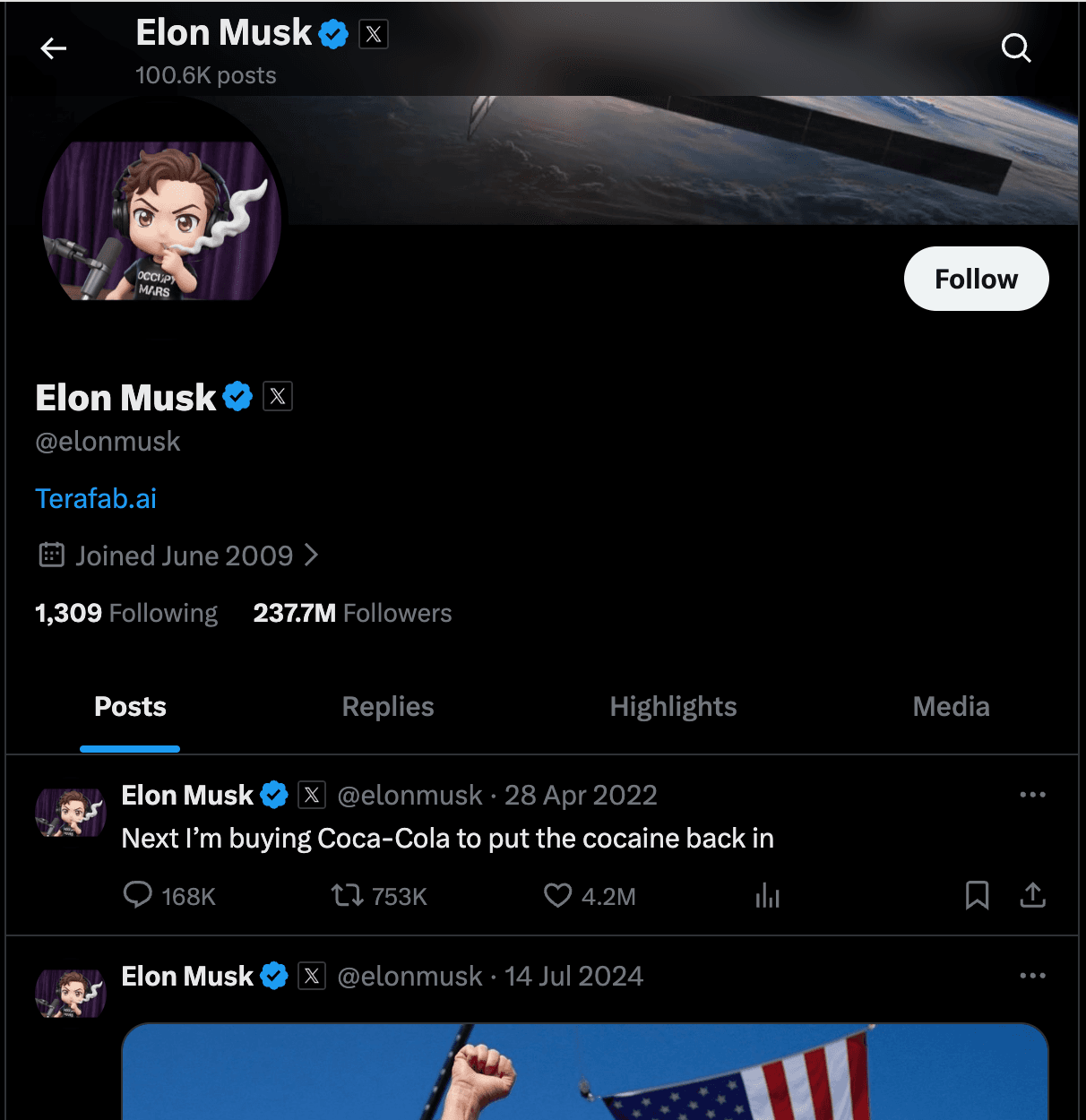
What happens without a skill
- Attempted to open x.com → 402 error
- Couldn't retrieve user data
- Couldn't access tweets
At that point, the process stopped. The agent didn't try an alternative approach, nor did it question the limitation. Instead, it concluded that the content was inaccessible and reported back that X (Twitter) was restricted. From its perspective, the task was impossible.
With the skill (web-access)
- Connected to Chrome via CDP
- Opened the page with session context
- Extracted profile and tweets via DOM
From there, it extracted the profile information and retrieved multiple tweets, including timestamps and content. The entire process followed a clear sequence: open, extract, return. There was no trial and error, no retries, and no uncertainty.
Same agent. Same task. Completely different outcome.
What actually changed
Not the model. Not the tools. The only difference was the skill.
1. Agents don't lack capability — they lack paths
Without the skill, the agent had WebFetch, curl, and other tools. But when WebFetch returned a 402 error, it stopped — not because it couldn't solve the problem, but because it didn't know there was another way.
With the skill, it skipped trial-and-error entirely and chose the right path from the start.
2. Tools are not skills
A tool is just a capability. WebFetch can fetch pages, CDP can control a browser. But neither tells the agent when to use what.
A skill does. It encodes things like:
- "X requires rendering — don't use WebFetch"
- "Use CDP with a logged-in session"
- "Extract tweets from
[data-testid="tweetText"]"
Without that guidance, the agent has hands but no instructions.
3. Uncertainty is the real cost
The most important difference in this experiment is not success versus failure, but certainty versus uncertainty.
Without the skill, the agent made a single attempt, encountered an error, and concluded that the task could not be completed. It treated a limitation in its approach as a limitation in the system itself.
With the skill, the agent followed a deterministic path and produced a complete result.
What makes the first case dangerous is not just that it failed, but that it failed with confidence. Instead of saying "I don't know how," the agent effectively said "this cannot be done."
In real-world scenarios, that kind of false certainty is often more problematic than an explicit failure.
A different way to think about agents
This experiment points to a shift in how we think about improving agent performance. It is tempting to focus on stronger models or more powerful tools. But capability alone does not guarantee execution.
Agents do not just need access to tools. They need to understand how to use them in context.
If tools are the hands of an agent, then skills are the instructions that guide those hands. Without instructions, even a capable agent defaults to guesswork. With instructions, the same agent becomes precise and reliable.
Why this matters
This isn't just about opening X. It's about how agents operate in real environments.
When agents fail today, it's often not because the task is impossible. It's because the path is unclear. And in those cases, instead of asking for help, they stop. Or worse — they give the wrong answer.
What we're building at Avoko
This is exactly why we ran this experiment. At Avoko, we're not trying to build better tools for agents. We're focused on something more fundamental: helping agents take the right path.
Because in most cases, the problem isn't capability. It's navigation. Agents already have access to powerful models and tools. What they lack is structured guidance — knowing when to use what, how to approach a system, and how to move from input to outcome without getting lost.
That's what we call skills.
Avoko is designed to make this layer explicit. Instead of leaving agents to guess, we make their decision paths observable, testable, and repeatable. We show where they hesitate, where they choose the wrong approach, and how different skills change the outcome.
Once you can see that, you can improve it.